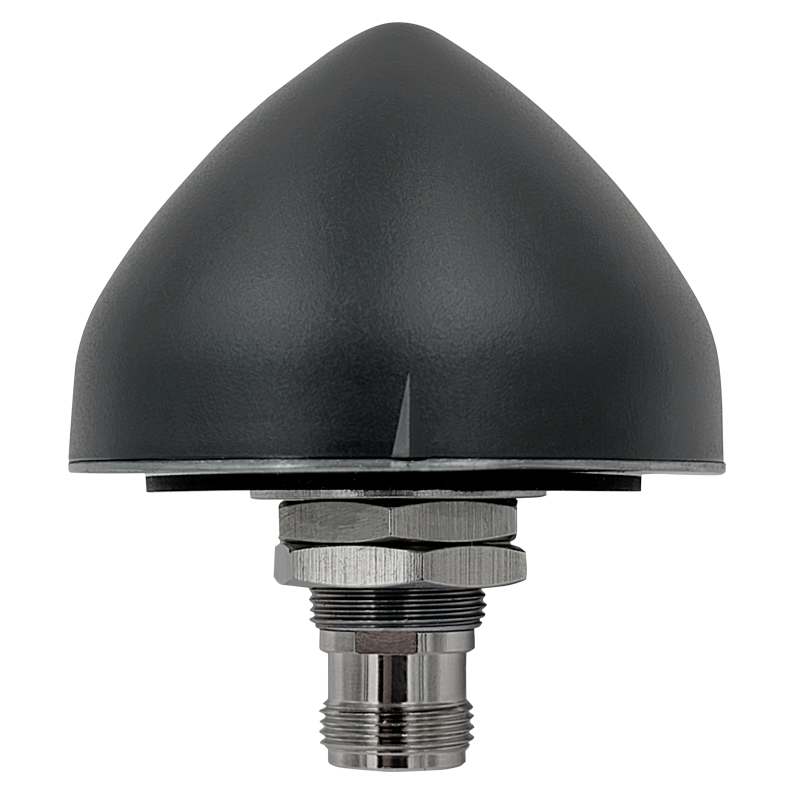
Key Accutenna® technology features
- Employs Calian’s unique dual feed ceramic patch technology
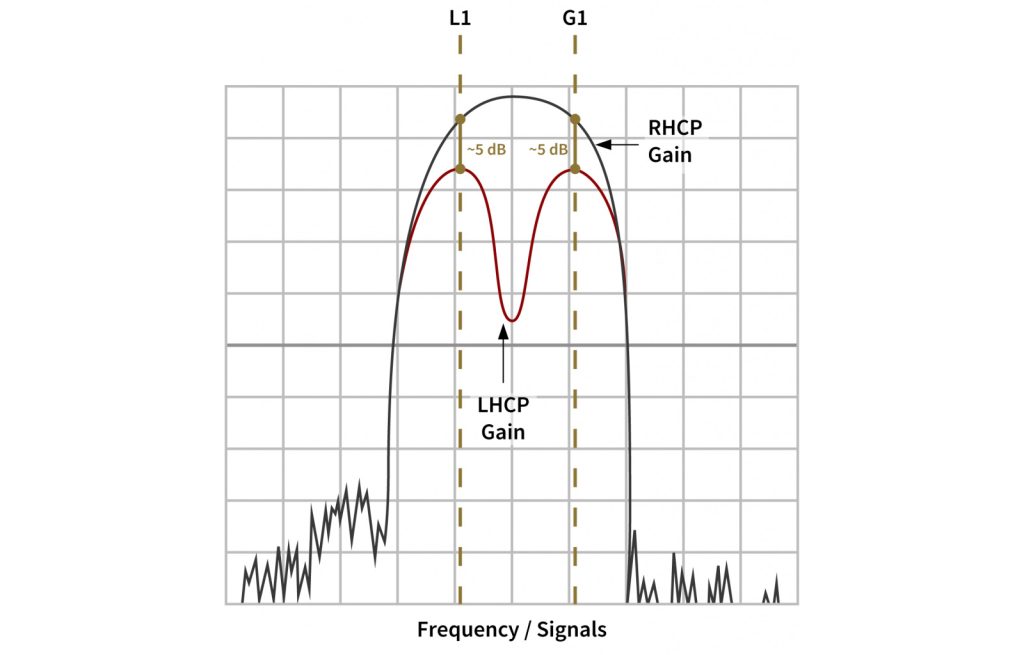
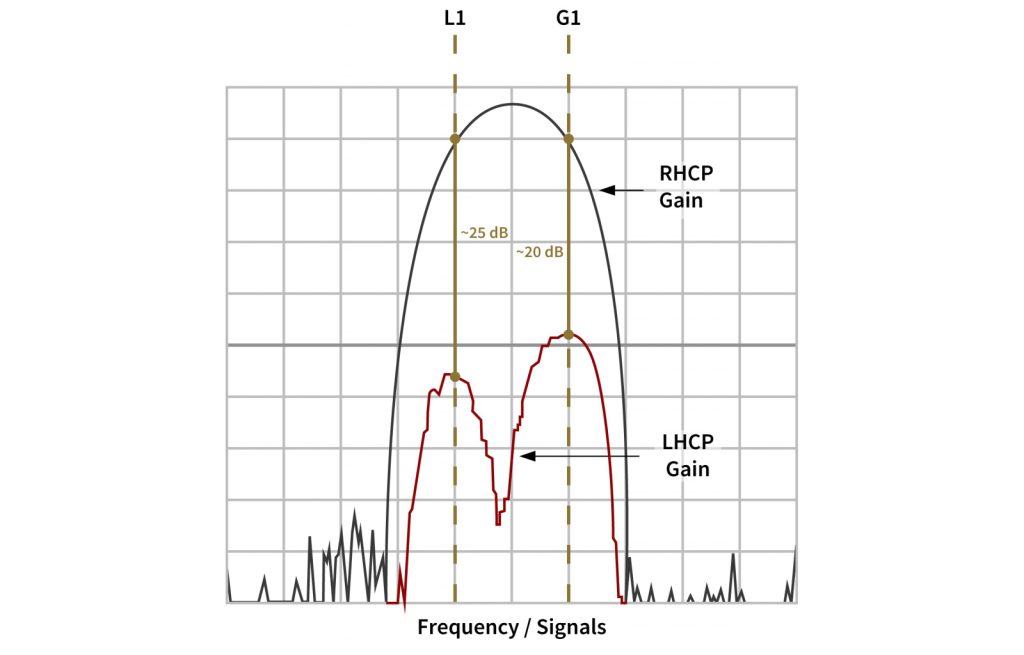
- Provides truly circular response over the entire antenna bandwidth of approximately 80 MHz
- Provides superior rejection of cross polarized signals (multi-path)
- Offers pre-filtering option to provide additional protection from near band signals
- Single patch Accutenna® technology antennas provide wide band coverage of the upper GNSS band, supporting multi-constellational coverage: (GPS (L1), GLONASS (G1), Galileo (E1) and BeiDou (B1) and L-Band Correction services)
- Dual patch Accutenna® technology antennas provide wide band coverage of the upper and lower GNSS band, supporting multi-constellational and multi-frequency coverage (GPS (L1/L2/L5), GLONASS (G1/G2/G3), Galileo (E1/E5) and BeiDou (B1/B2))
GNSS has changed. An increasing number of GNSS receivers can track several constellations (GPS/ GLONASS/Galileo/BeiDou) and many frequencies. Single feed antennas were suitable for single constellation and single frequency tracking. In today’s multi GNSS environment, Calian’s Accutenna® technology is required to provide the accuracy and precision supported by Real-Time Kinematic (RTK) and Precise Point Positioning (PPP) applications .
What is a Dual Feed Antenna?
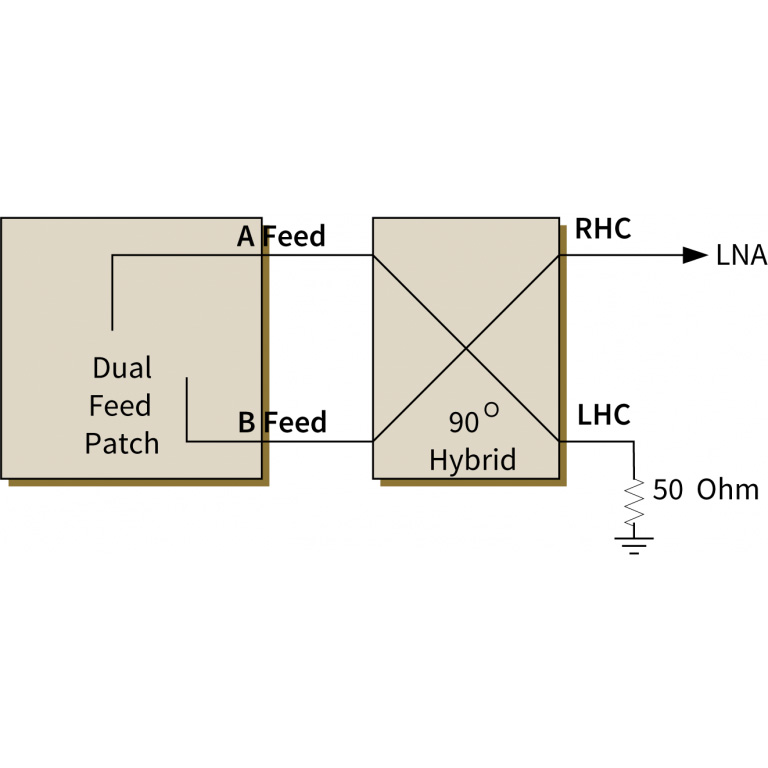
Dual feed points are used on patch antennas to receive a circularly polarized wave form. Both feed points receive independent linear signals which are then combined with a 90 degrees phase shift, to produce a circular signal. This applies over the full bandwidth of the antenna and greatly improves rejection of cross polarized signals (caused by multi-path reflections). Because multi-path is a significant cause of positioning error, dual feed antennas provide much higher precision than single feed antennas.

Talk to a Calian expert today
Reach out to learn how our innovative solutions can help you solve your most complex challenges.

