Faces of Calian shines a spotlight on our incredible team, sharing the people, stories, and work that make our company thrive.
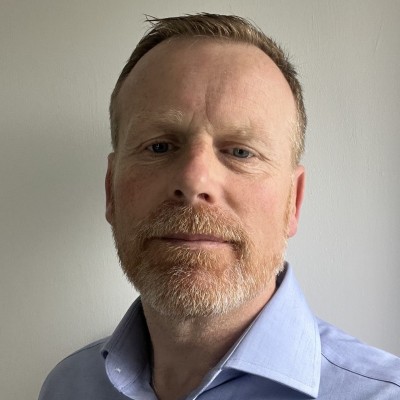
Below, we interview Ben Richards of our UK office
Ben, can you tell us a bit about your background and your role at Calian?
I spent 16 years as an infantry officer in the British army before moving into the defence industry. My industry journey started as a delivery programme manager supporting instrumented live training in Canada and the UK before moving into business development. I moved to Calian in December 2025 as the business development director based in the UK. Here I am responsible for the growth of the UK business.
Why did you choose to work for Calian?
I was drawn towards Calian by the people and potential of the business. I have previously worked with parts of the team and was keen to become part of it. Calian offers such a broad range of capabilities and solutions across many industries, not just defence. I feel there is real potential to bring more of what Calian offers in Canada and across Europe, into the UK marketplace. By offering better solutions, we can deliver better outcomes for our customers when failure is not an option.
Calian has been experiencing a period of growth across the UK and Europe. What do you think is driving that growth?
Calian offers a unique blend of subject matter expertise (SMEs) and technology to support customers throughout NATO and the UK. Most of our competitors offer either technology solutions or manpower.
Our interoperability and integration solutions, in particular, are allowing organizations to incorporate capabilities from different vendors into one data environment both in training and operationally. I think that’s turning customers’ heads.
How is Calian currently helping enhance operational readiness for the UK Armed Forces?
Today, Calian offers a range of capabilities to the UK, supporting everything from army headquarters elements down to tactical training.
At the top level we are delivering exercise design, development and delivery and mentoring support to senior officers. At the same time, we provide OPFOR, battlefield effects, representative armoured vehicles and casualty simulation. All of this is designed to enable high-level, high-fidelity, realistic training—and help the British army enhance their operational readiness.
How important do you think it is to have ex-military personnel as subject matter experts when they’re designing and delivering training?
We are fortunate to have many former military personnel working at Calian, from senior NCOs to generals. In some roles, military experience is essential because you get that innate, organic understanding of the language, processes and people that you’re working with. The SMEs are then able to fulfil some of the functions that the military is either unable to provide or where that manpower would be better employed elsewhere. This was particularly true at the Land Command and Staff College, where they really value the input and mentoring support for military training provided by Calian’s SMEs.
In other roles, such as casualty simulation and special effects, it’s not so much the military experience that counts but the ability to create immersive and believable experiences. And, in my opinion, we employ some of the best people in the industry.
Calian is exhibiting at ITEC in London this year. What are you hoping to achieve or learn?
ITEC is a show that that moves venue year on year, which means you get quite a diverse mix of customers and industry. I’m hoping to engage with current and potential customers, but also to build on the business-to-business relationships. These relationships help us push boundaries, challenge assumptions and create the kind of collaborative solutions today’s customers expect.
What challenges are you seeing across the customer base?
Individual countries across the NATO alliance have their own acquisition pipelines and existing capabilities. The challenge comes when they need to work across NATO with different European and non-European countries. They need to integrate and be interoperable with disparate systems.
At Calian, we see this issue when organizations are working with simulation and command and control systems. We’re talking to various customers about how our Virtual Command and Control Interface (VCCI) tool can provide the middleware that will allow a multitude of different simulation systems to talk into a single database. This then creates a common operating picture, available across all simulation and battle management systems.
We see similar issues in operational environments with tactical communications networks. Different devices from different countries might not be compatible, leading to old-school solutions like lending radios out. Our audio distribution service toolset is being used to bridge those nets to enable effective voice and data communication.
I’ve seen firsthand how enabling this kind of interoperability can deliver real value to those countries operating in a multinational environment.
What keeps you busy outside work?
I have two children, and a dog to walk so they take up a lot of time, but I also am a keen motorcyclist, and I still play rugby in my 50s.

