
Four themes emerged consistently throughout the event—digital transformation, operational excellence, collaboration and data-driven ROI. We discuss some of the top insights shaping the next era of PSP delivery in Canada and beyond.
1. Digital Transformation: PSPs are Entering a New Era
The Summit opened with a clear message: PSPs are shifting from traditional service models to digital, insight-driven ecosystems. The keynote underscored how necessary it is for PSP providers to move beyond just collecting data to actually turning these insights into solutions that improve program engagement and outcomes.
Across sessions, speakers also pointed to the rapid rise of AI-enabled tools, digital-first outreach, predictive analytics and modular platforms that accelerate program design and scaling. Interoperability also emerged as a non-negotiable foundation, enabling PSPs to connect seamlessly with HCP, payer, pharmacy and diagnostic systems.
The overall takeaway was that digital transformation must enhance—not overshadow—the human side of care, with technology reducing the administrative burden so clinicians can focus on patients. As digital-first becomes the new baseline, PSPs that embrace this model will be the ones leading the next chapter of patient support.
2. Operational Excellence: Building Sustainable, Scalable PSP Models
Throughout the day, one key area of concern continued to emerge: How can we, as PSP providers and collaborators, sustain innovation while managing cost, efficiency and rising system pressures? Manufacturers are facing tighter budgets, growing patient volumes, and escalating expectations from patients, payers and regulators. In response, PSPs are being pushed toward more standardized, measurable and streamlined operational models that can scale without sacrificing quality.
Speakers highlighted several pillars of effective operational excellence—from scorecards and transparent KPIs that bring clarity to performance and vendor management, to automation that eliminates duplication, reduces administrative burden, and speeds up processes like prior authorizations. Clean, normalized data emerged as a foundational requirement, enabling reliable analytics, AI adoption and smoother program expansion.
Many organizations are also adopting product-management disciplines—using sprints, backlog prioritization and rapid iteration cycles—to refine patient journeys, update workflows and introduce new services without disrupting active programs. These approaches are reinforced by stronger governance frameworks that help PSPs stay sustainable as therapeutic complexity increases, especially with the rise of multi-indication launches and larger, more diverse patient populations requiring tailored support.
3. Collaboration: Multi-Stakeholder Partnerships are Now Essential
Collaboration emerged as one of the Summit’s most persistent themes, underscoring a shared reality across manufacturers, providers, payers and technology partners: no single stakeholder can solve the challenges facing modern PSPs on their own.
Panelists pointed repeatedly to system fragmentation as a core obstacle. HCPs described the daily friction caused by administrative bottlenecks, disconnected platforms and persistent staffing shortages—challenges that delay access and diminish the patient experience. Manufacturers, meanwhile, stressed that effective partnerships now demand more than transactional execution. They are seeking collaborators who bring strategic insight, data maturity and alignment with therapeutic and organizational priorities.
Across discussions, interoperability emerged as the foundation of meaningful collaboration. Whether connecting PSP vendors with EMRs, specialty pharmacies, insurers or public systems, seamless data exchange is now essential for generating real-world evidence, improving care coordination and communicating value to stakeholders. Several speakers also underscored the rising importance of patient advocacy frameworks as patients navigate increasingly complex private payer environments and variable benefit designs.
4. Data & ROI: The Common Language of PSP value
One of the most powerful themes to emerge from the Summit was the industry-wide shift toward outcome-driven, data-validated PSPs. “Value,” however, looks different depending on who you ask: patients care about feeling supported and enabled, payers focus on cost and outcomes, executives want strategic impact, and clinicians need seamless workflows. Modern PSPs must now quantify and communicate value across all of these audiences.
The conversation made clear that retrospective reports are no longer sufficient. Manufacturers expect real-time insights and a richer set of outcome metrics, including initiation rates, persistence, time on therapy, patient satisfaction and even forecast accuracy. Several presenters noted that many organizations are now using 20-30 indicators to demonstrate PSP impact—far more than in previous years—reflecting the growing sophistication of what must be measured.
Another major theme was the need to connect disparate clinical, pharmacy and patient datasets to illuminate the full patient journey and pinpoint where programs truly move the needle. This work depends on rigorous data governance and privacy practices, which are becoming non-negotiable as AI and cloud technology scales across PSP operations.
For our team, the message was clear: PSPs are no longer cost centres; they are strategic enablers for all areas of healthcare. And demonstrating their value requires both validated real-world evidence (RWE) and compelling storytelling that reflects the human impact behind the data.
Where Calian Fits
Across the PSP lifecycle, Calian integrates the people, platforms and evidence manufacturers need to design programs that deliver measurable outcomes while meeting the rising expectations of patients, payers and regulators.
Co-Designing the PSP journey: Leveraging technology, clinical operations and policy-aware PSP expertise, Calian bridges gaps across pharma, PSP operators, payers and public health systems. This enables structured collaboration, secure data-sharing and engagement models that reduce friction, support adherence and strengthen multi-stakeholder PSP ecosystems.
Digital backbone: With API-centric, FHIR-ready, microservices-based platforms like Nexi and Corolar, Calian provides the infrastructure to support AI-ready data flows, real-time insights and secure, connected PSP operations.
Operational delivery: Through national clinical networks, integrated digital tools and a proven multidisciplinary approach, Calian accelerates implementation, streamlines workflows and scales programs efficiently. Standardized processes across the PSP ecosystem reduce fragmentation and drive sustainable operational growth.
Data, analytics and digital infrastructure: Calian’s privacy-first environment, advanced analytics frameworks and customizable dashboards help manufacturers link disparate datasets, generate actionable insights, improve forecasting and clearly demonstrate both patient and business impact.
Looking Ahead: Going Beyond Modernization
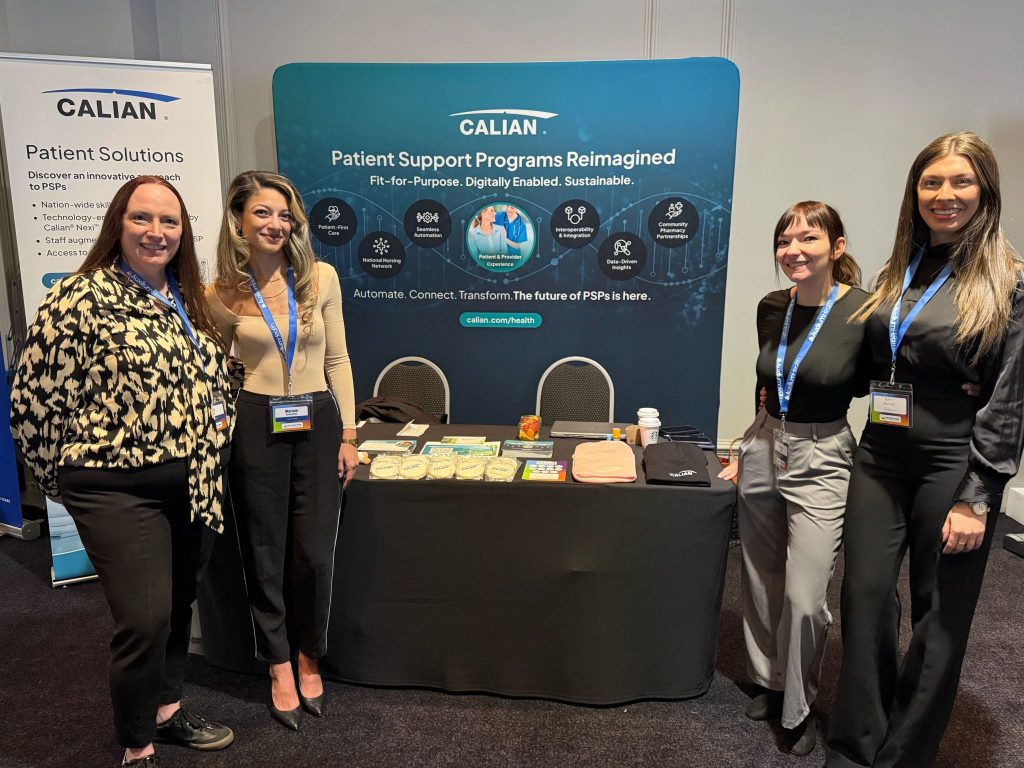
The next era of PSP delivery demands interoperable, modular, digital-first PSP ecosystems, paired with continued decentralization and tighter integration with real-world care models. This shift represents not just modernization, but a fundamental redesign of how support is delivered, measured and scaled.
And for companies like Calian, the opportunity is clear: to help shape a PSP ecosystem that is not only more innovative and efficient, but also more human, connected and outcome-driven.
Learn more about how we’re reimagining PSPs here.

