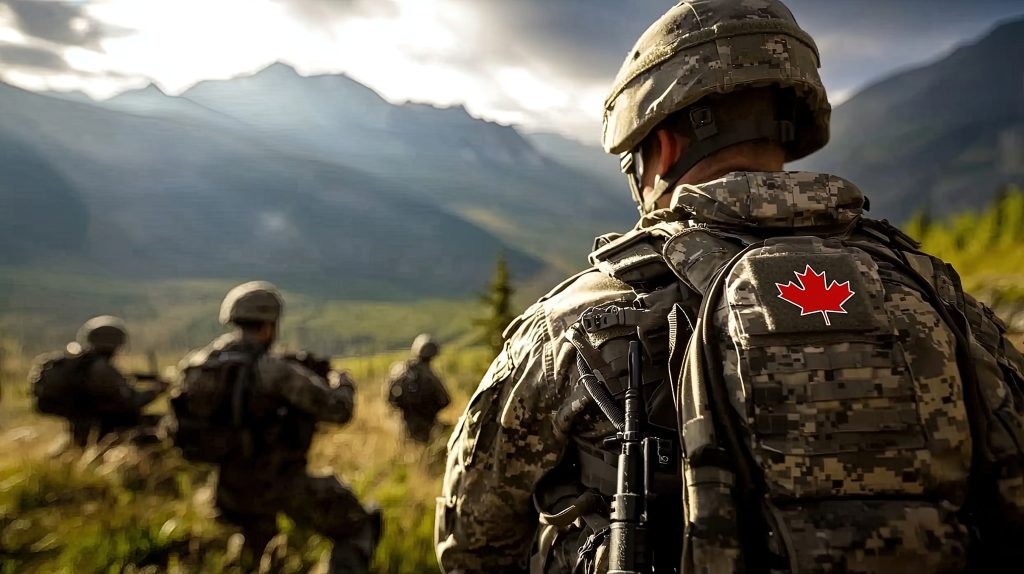
Canada’s North is central to continental defence—and to Canada’s sovereignty. Climate change, rapid technological shifts and renewed competition are transforming the Arctic from a distant buffer into a contested, multi-domain operating environment where speed, integration and interoperability determine success. In this context, a modern C5ISRT approach—command, control, communications, computers, cyber, intelligence, surveillance, reconnaissance and targeting—becomes the backbone for effective decision-making and resilient operations.
Why the North demands an integrated C5ISRT posture
The Arctic’s vast distances, harsh weather and sparse infrastructure complicate sensing, communications and sustainment. At the same time, adversary capabilities—from long-range missiles to sub-threshold cyber and information operations—compress warning timelines and blur domain boundaries. Canada’s updated defence vision, Our North, Strong and Free, prioritizes Arctic sovereignty, NORAD modernization and datacentric capabilities that can fuse sensors, protect networks and move from sensing to action at speed.
C5ISRT provides that connective tissue. NATO and allied concepts emphasize multi-domain operations and converged effects, which require pan-domain command and control, interoperable data standards and secure, resilient communications across land, sea, air, space, cyber and the electromagnetic spectrum. Canada’s PanDomain C2 (PDC2) concept outlines how to link sensors to decisionmakers and effects using people, processes, structures, data and technology—a template tailor-made for Northern operations.

Closing the Arctic awareness and communications gap
Domain awareness starts with persistent sensing. Through NORAD modernization, Canada is fielding over-the-horizon radar (OTHR) to extend detection ranges deep into the approaches to North America. Recent milestones include site selections for Arctic OTHR and a technology partnership leveraging Australia’s JORN expertise, with initial capability targeted before decade’s end. These systems “see” beyond the curvature of the Earth by bouncing signals off the ionosphere, enabling earlier warning and longer decision cycles in the North.
Awareness is only useful if it can be shared. Polar and high-latitude connectivity has historically been a weak link; that is changing. Canada’s Enhanced Satellite Communications Project – Polar is strengthening secure military SATCOM in the Arctic with domestic industry partners, while new high-elliptical and low-Earth-orbit constellations (e.g., Viasat’s Arctic payloads and emerging LEO relay services) expand bandwidth and reduce latency at extreme latitudes—critical for ISR, command-and-control and coalition interoperability.
From data to decision to action
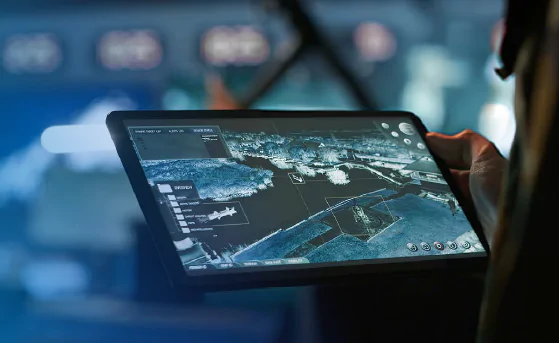
A resilient Northern posture hinges on transforming raw sensor data into trusted, actionable intelligence—and doing so with allied-interoperable, sovereign control of critical data. Allied guidance on multi-domain C2 underscores the need for digital transformation, federation of mission networks and common data fabrics so joint and coalition teams can train, plan and fight as one. Canada’s PDC2 aligns with NATO’s multi-domain approach, enabling pan-domain situational awareness and faster, better-informed targeting decisions.
Train as you will fight—especially in the North
Live training alone cannot keep pace with the Arctic’s complexity or today’s decision timelines. Synthetic, live-virtual-constructive (LVC) environments that mirror operational systems allow forces to rehearse multi-domain scenarios—from contested electromagnetic conditions to space-enabled Arctic missions—at scale and lower cost. Canadian and NATO training programs increasingly rely on these integrated environments, with Canadian defence partners, such as Calian, delivering large, joint simulations that have prepared hundreds of thousands of personnel for real-world operations.
Allied credibility, sovereignty and Indigenous partnership
Resilience in the North is also about presence and partnerships. Year-round operations, Northern exercises, and the unique contribution of the Canadian Rangers enhance domain awareness and response, while interoperability with allies strengthens deterrence. These activities, combined with sustained investments in infrastructure and sensors, signal credible sovereignty—and they work best when co-designed with Indigenous and Northern communities.
The bottom line
C5ISRT isn’t a stack of technologies; it’s an integrated system of systems and a way of operating. In the Arctic, it means persistent sensing (including OTHR and space-based ISR), assured polar communications, pan-domain C2, and rigorous synthetic training that stitches it all together. With these pillars in place—and aligned to NORAD modernization and NATO standards—Canada can see first, decide faster, act confidently and strengthen resilience in the North.