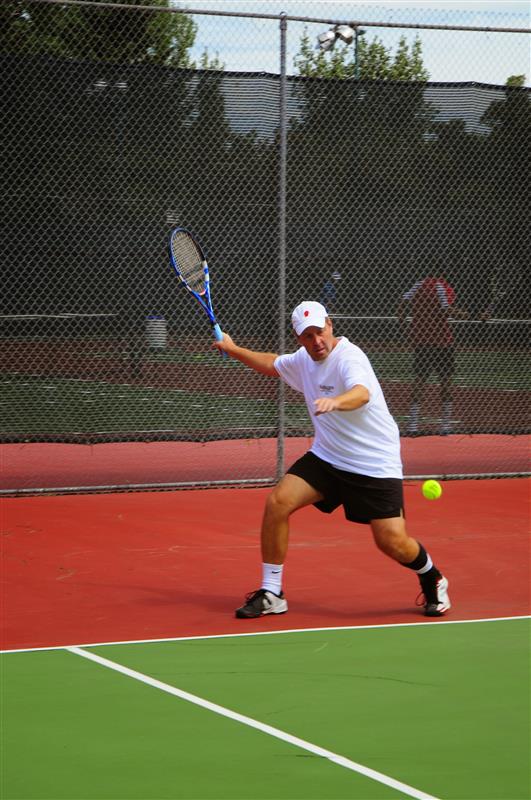
Faces of Calian shines a spotlight on our incredible team, sharing the people, stories, and work that make our company thrive.
Below, we interview Brian Gyetko of our Saskatoon office
Brian, you previously represented Canada at the Olympic Games in tennis. What was that experience like?
Competing in the 1992 Summer Olympics in Barcelona was truly a once-in-a-lifetime experience.
I played men’s doubles in a 32-team draw that included big names like Pete Sampras, Andre Agassi and Boris Becker—many already Grand Slam champions. To be on the same courts as those athletes made me feel incredibly proud of how far I’d come.
We won our first-round match against Denmark, which was a huge moment for us. In the second round, we lost to the South African team that went on to win the silver medal.
Although we were eliminated mid-Games, it provided the time to experience the Olympics as a spectator and fully soak up the atmosphere.
Is there a key Olympics moment that stands out in your memory?
The walk-in at the opening ceremonies was legendary—and still etched in my brain today.
We took a bus from the Olympic Village to the basketball stadium used as a holding zone for all the participating countries. When Canada was called, we filed out toward the main stadium, guided by eight taped lanes on the ground.
As we entered, the USA basketball “Dream Team” was seated beneath the stands—including Larry Bird, Magic Johnson, Michael Jordan—all just an arm’s length away! We took pictures, and flashes were going off everywhere.
We were quickly ushered forward to keep the procession moving, but it was an amazing experience I’ll never forget.
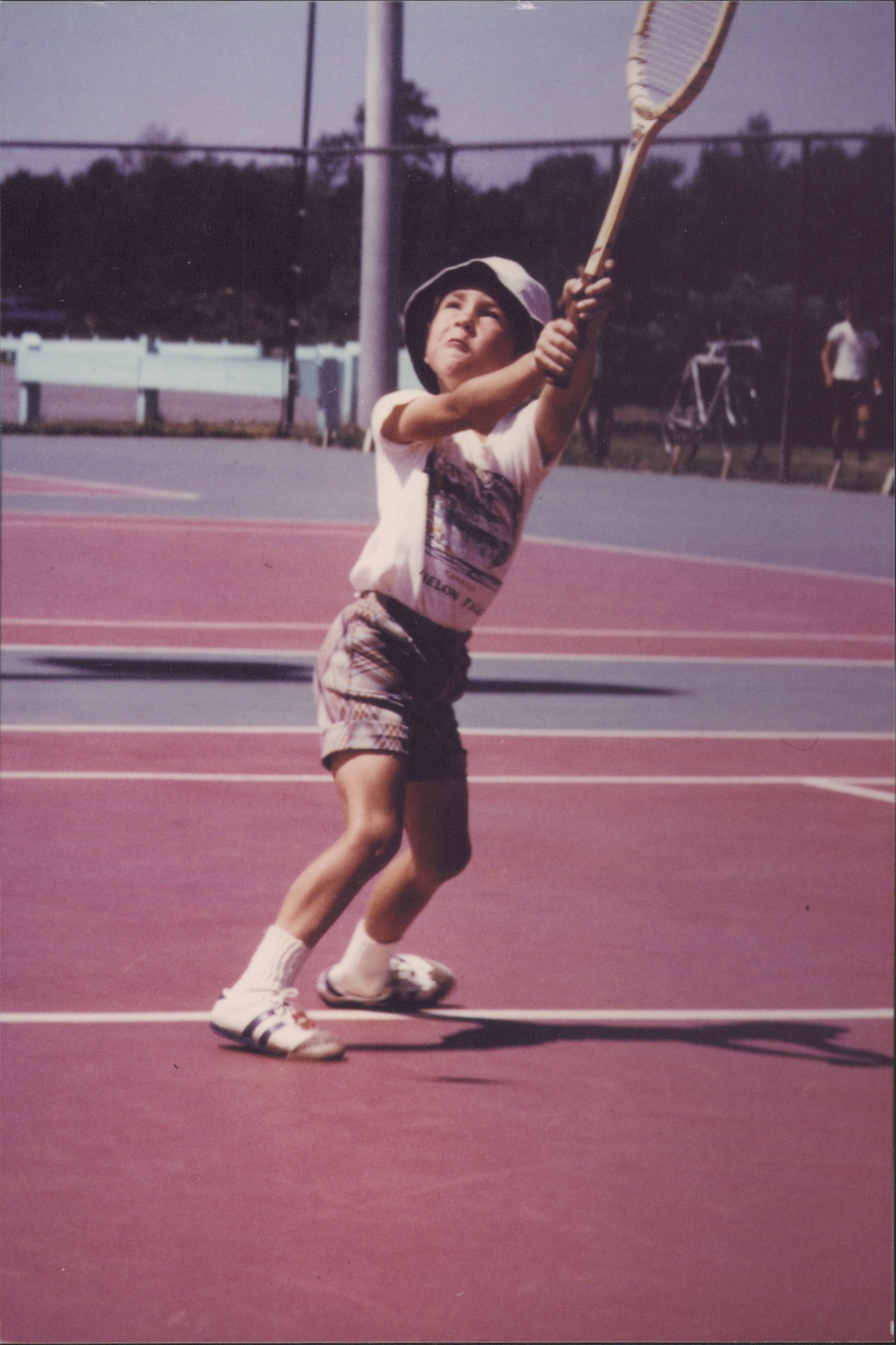
Take us back to the beginning – how did you get started in tennis?
I grew up in Welland, Ontario, where tennis played a huge role in my early life. Starting at age three, I spent a lot of time at the courts—my dad played after school, and my mom wanted the family together. Before long, the courts became my second home.
By age six, I was playing up to eight hours a day. It wasn’t forced—back then, it was social. We’d hang out, play anyone, and jump into matches as courts opened up. When players rotated off and new doubles pairings were needed, that’s when I’d step in.
Things became more competitive by age 10. During the winter, I travelled to Toronto most weekends to play tournaments and competed across southern Ontario in the summer.
I still remember one especially busy month—six tournaments in total, from smaller 32-player draws on weekends to large 128-player events during the week.
How did you transition from elite sport to a career at Calian?
I started competing nationally as a junior, winning the Canadian Junior Nationals twice, before moving onto the international circuit. That path earned me a scholarship to Arizona State University, where I completed a Bachelor of Science in Aerospace Engineering and was a three-time All-American.
Right after university, I qualified for the Olympics, suddenly finding myself on one of the biggest stages in sport.
I continued playing professional tennis for four more years, getting to a world high ATP ranking of 289 in singles and 155 in doubles. However, living out of a suitcase year-round was challenging, so I began turning my attention toward a long-term career.
In 1996, I moved out west and joined Calian. I’ve now been with the organization for nearly 30 years.
What lessons from your Olympics journey still resonate with you?
Reaching the Olympics is about steady progress—but moving up a level requires a doubling of the efforts, with sharper focus, more discipline, and attention to the smallest details. And this doubling the efforts only produces a 5% gain, but that is a huge difference.
That mindset translates directly to my work at Calian.
The focus on quality, preparation and professionalism is what separates good from great, whether you’re competing in professional sport or delivering complex technical solutions to customers.
Brian Gyetko
What is your role at Calian today? Tell us about the type of work you do.
I’m a Senior Software Technical Project Manager with the Software Engineering team, where I also lead the User Interface group. Over the years, my role evolved to software lead, and eventually into project management and team leadership.
Today, a significant part of my work focuses on satellite communication products including the Illuminator Decimator. It’s a multi-site, enterprise carrier monitoring solution used to measure carrier strength—essentially tracking how much power is being transmitted and received across networks.
What do you like most about working for Calian?
Without question, it’s the people.
The technical sharpness, integrity, and quality of work here are exceptional. If a customer asks a question, there’s always someone who knows the answer. That collective expertise and collaborative mindset is what makes Calian special.
Do you have a favourite Calian moment?
There are so many, but the moments that stand out most are when a product you’ve worked hard on starts gaining traction. Hearing Sales say “We’ve sold another one” never gets old.
What keeps you busy outside of work?
I still coach tennis. I enjoy helping others understand not just the mechanics of the game, but how the mind works under pressure. There are so many parallels between coaching, engineering, and leadership—empathy, communication, and breaking complex problems into manageable pieces.
I also enjoy cooking and baking. I bring pies into work pretty regularly—sometimes as a thank-you when someone’s done a great job. Around the holidays, I’ll often bake 15–20 pies and donate them to the Food Bank so families can enjoy something special.
For me, using the creative side of my brain—whether in baking or engineering—is an important part of staying balanced.