Canada is at a critical crossroads in defence modernization. As the nation accelerates defence spending toward NATO’s GDP target, a pressing question emerges: can Canada rely on domestic expertise for military training? The answer has profound implications for Canadian sovereignty, economic prosperity and operational readiness.
The path forward requires a comprehensive understanding of why Canadian companies represent the optimal solution for defence training excellence—delivering superior outcomes while building domestic capability that serves national interests.
The Training Crisis Behind Canada’s Personnel Shortage
Canada’s military training landscape reflects broader challenges within the defence sector. The Canadian Armed Forces currently faces a personnel shortage that has reached critical levels, with recruitment and retention remaining persistent concerns across all service branches.
The complexity of modern military operations requires sophisticated training solutions that traditional methods cannot adequately address. Today’s military personnel must master advanced technologies, complex systems integration and multi-domain operations that span land, sea, air, space and cyber domains. These requirements demand training providers with deep technical expertise, proven delivery capabilities and intimate knowledge of Canadian operational contexts.
Canadian defence training companies possess unique advantages in addressing these challenges. Their proximity to military installations, understanding of Canadian operational procedures, and ability to adapt quickly to changing requirements create training environments that foreign providers cannot replicate effectively.
Canadian Companies: Already Delivering Results
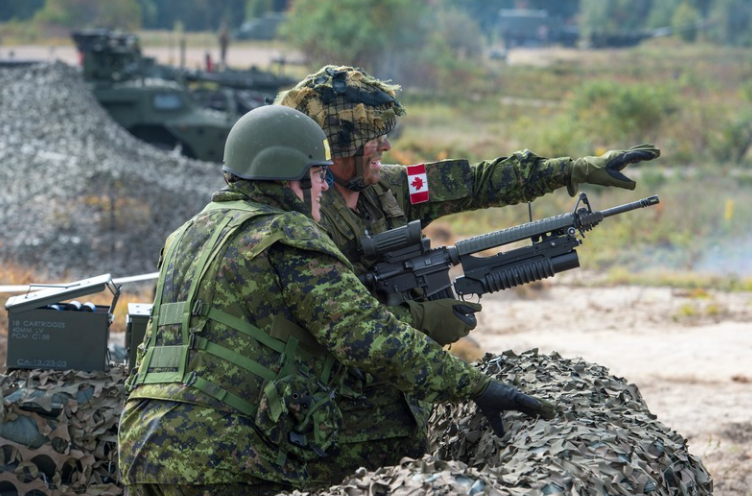
Canadian defence training companies aren’t theoretical solutions—they’re active partners delivering measurable results. Calian has trained over 250,000 CAF personnel and 50,000 NATO personnel, processing approximately 10,000 new military personnel annually through its programs.
This domestic capability spans the full spectrum of training needs, from basic classroom instruction across 20+ CAF schoolhouses to complex multinational exercises involving up to 12,000 participants. Calian delivers 15-20 large exercises annually for the CAF and four to six complex exercises for NATO, demonstrating their ability to handle both domestic and alliance requirements.
The technology backing these programs represents genuine innovation. Canadian-developed solutions like immersive virtual reality training environments, integrated command and control systems, and sophisticated simulation platforms provide realistic training experiences while capturing performance data through eye-tracking and voice recognition technology.
Strategic Sovereignty Through Domestic Capabilities
Defence training represents a cornerstone of national sovereignty. Nations that control their own training infrastructure maintain the ability to adapt quickly to changing threats, develop specialized capabilities, and ensure continuity during international tensions or supply chain disruptions.
Canada’s current geopolitical environment makes this particularly relevant. Growing political tensions with traditional partners and ongoing trade uncertainties highlight the risks of over-dependence on foreign suppliers. Recent polling shows Canadians increasingly view European partners as more reliable trading relationships, while defence procurement decisions face scrutiny amid strained relationships with the U.S.
Canadian training companies offer supply chain transparency that foreign alternatives cannot match. During COVID-19, global supply chains proved brittle and opaque, creating vulnerabilities for major programs. Domestic suppliers provide visibility and control that enhances program reliability while reducing exposure to external political pressures.
Economic Impact: More Than Just Jobs
The economic argument for Canadian defence training extends beyond simple job creation. In 2022, Canada’s defence industry contributed $9.5 billion to GDP while sustaining over 81,000 jobs—many in high-value STEM positions that deliver 2.5 times the share of STEM jobs compared to broader manufacturing sectors.
The innovation multiplier is even more impressive. The defence sector demonstrates 3.4 times the research and development intensity of other manufacturing sectors, creating a foundation for technological advancement that benefits the entire economy. Canadian space sector contributions—closely linked to modern defence training through satellite communications and positioning systems—directly sustain over 12,600 jobs and indirectly support another 12,600 through supply chain effects.
These aren’t just statistics—they represent communities across Canada where defence manufacturing facilities provide stable, high-paying employment while driving local innovation ecosystems.
Operational Advantages of Domestic Training
Canadian-developed training solutions offer operational advantages that extend beyond cost considerations. Canadian companies understand Canadian operational requirements, climate conditions and cultural factors that shape military effectiveness. Calian employes over 2,000 veterans who bring decades of experience directly into training development and delivery.
The integration of Calian’s simulation technologies creates training environments that perfectly match Canadian equipment and procedures. This seamless compatibility reduces training time, improves skill transfer and ensures personnel are truly ready for operational deployment.
Canadian companies also provide surge capacity during crises. With established infrastructure and personnel already embedded across 35+ CAF bases and installations, Calian can rapidly expand training delivery without the delays inherent in international procurement processes.
Building Long-Term Capability
Today’s training investments will define Canada’s military capability for the next generation. By prioritizing Canadian companies, Canada builds domestic expertise that compounds over time, creating innovation clusters and supply chains that strengthen with each program.
This approach also supports smaller Canadian businesses throughout the supply chain, creating resilient networks that can adapt to changing requirements while maintaining high security standards and transparent oversight.
The Path Forward
Canada’s defence training needs are immediate and growing. The choice between domestic and foreign solutions will shape military readiness, economic prosperity and sovereign capability for decades. Canadian companies have demonstrated their ability to deliver world-class training solutions while providing economic benefits and strategic independence.
In an era of increasing global uncertainty, investing in Canadian defence training companies isn’t just sound procurement policy—it’s a strategic imperative for national sovereignty. The question isn’t whether Canada can afford to buy Canadian, but whether it can afford not to.
To learn more about this topic download our Buy Canadian whitepaper
Listen to our Buy Canadian podcast episode on Spotify.